与 Hamilton Helmer(《7 Powers》作者)聊商业战略
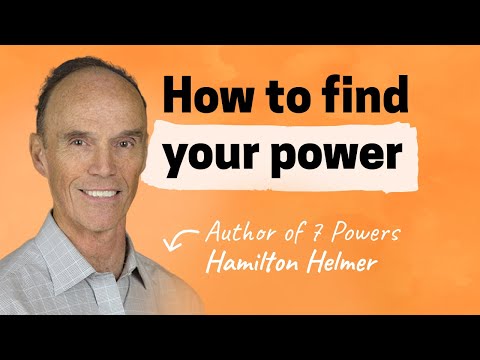
Business strategy with Hamilton Helmer (author of 7 Powers)
Hamilton Helmer: Warren Buffett famously said, in business.
Audio: I look for economic castles protected by unbreachable moats.
Hamilton Helmer: Power requires a benefit and a barrier, so he’s taking care of the benefit part by saying a castle, you have to have a pretty good understanding of why it’s a castle and not a shack.
”Great Teams” vs. Power
Lenny Rachitsky: So in a lot of decks it’s like, “Oh, we have the most amazing team. We move the fastest.” You mention how rarely is that actually a power?
Hamilton Helmer: You’re on a treadmill and if you stop running on that treadmill, you get creamed, but it’s not power. The things that drive operational excellence can be mimicked.
Introducing the Guest
Lenny Rachitsky: Let’s actually talk about achieving these powers.
Hamilton Helmer: There’s a thing called power progression. There are times when certain types of power are available. The path to power is where the rubber meets the road.
When to Think About Power
Lenny Rachitsky: Today my guest is Hamilton Helmer. Hamilton is a legend in the world of strategy. He’s the author of 7 Powers, which outlines a framework for identifying and developing sustainable competitive advantage. It is widely considered to be the best book on strategy and people like Patrick Carlson, Peter Thiel, Reed Hastings, Daniel Eck, and so many more leaders credit the book and Hamilton’s teachings for helping them build durable lasting companies. In our conversation, Hamilton shares what sources of power startups can start developing early, which types of power companies often think they have but they don’t, how power relates to strategy and moats, when to start thinking about power as a startup and also what individual product managers and non-leaders can do about these insights about power. Also, how Hamilton sees AI impacting various entry and the sources of power. He also gives a preview of his new book that he’s working on currently and so much more.
This enables fast authorization checks at enormous scale while maintaining a flexible model that can be adapted to even the most complex use cases. If you’re currently looking to build role-based access control or other enterprise features like single sign-on, SCIM or user management, you should consider WorkOS. It’s a drop-in replacement for Auth0 and supports up to 1 million monthly active users for free. Check it out at WorkOS.com to learn more. That’s WorkOS.com.
Defining Strategy and Power
Hamilton Helmer: Hi Lenny, a pleasure to be here.
How Power Shapes Strategy
Lenny Rachitsky: It’s even more my pleasure. I want to start by talking about when power becomes important. When do you recommend founders start thinking about power in terms of pre-product market fit, post-product market fit? Is it worth spending time thinking about power early? Obviously it’s good to think about a little bit, but how much and how seriously should founders be thinking about it before they found something that people actually want?
Order of the Four Powers
Hamilton Helmer: One of the things that has really surprised me in the last five years has been that my understanding of the answer to that question has changed. And before I thought it was you do product market fit and then you do strategy, and if you try and put strategy before product market fit, it is not much you can do with it. That’s wrong. Actually, I mentioned before one of the great pleasures for me in my work is being able to talk to company founders and one of the things that has surprised me is that conversations with them, even at an early stage about strategic matters have a richness and relevance to me that was unexpected.
And founders are practical people. I mean it’s very hard to do what they’re doing and they have to be extremely focused and choose what’s worthwhile spending time on. And so in observing their reactions and that dialogue, I could see that there was something going on that was meaningful to them. And this second book we’re working on, we’ll tease out why that’s so more, but the answer to your question is when should you thinking about this? The answer is always. And that’s an odd answer. And so even before you have product-market fit, it’s worth thinking about strategy. Now it’s not strategy in the sense of this fully articulated strategic planning, we’re going to do this, these are going to be the competitors, this is how we’re going to answer them. This is how we’ll price. Not like that at all. At the earlier stage, you can imagine wildly more degrees of freedom and the questions are of the business propositions that you’re thinking of in trying to get to product-market fit, what are the underlying characteristics that might tilt them towards the availability of power or not?
And those actually are meaningful conversations and certainly by no means certain. You’re tilting probabilities, you’re not creating a determinative things. And then later on, once you’ve already have product-market fit, then you have to understand your source of power to understand what competitive position is because then you have to establish that. And then later on in a more stable phase when you’re in a stability phase of business, you have to know what your source of power is if you have one, because you have to know how to defend it. And then also it is also the foundational knowledge that you need for if there’s another step. Because another thing that’s quite surprising about iconic businesses is they often have a second act or a third act or fourth act. I mean think of AWS or Intel going into CPUs or Apple going into iPhones, all not the origin of business. And that’s actually common, not unusual, and that’s starting the process all over again.
Powers Founders Misjudge Most
Lenny Rachitsky: Awesome. You mentioned this word strategy. I want to set a little foundation here. How does strategy relate to power when people are thinking about these two concepts? And then do you have just a nice definition of what strategy is? Everyone’s always just like, “What the heck do you mean when you’re talking about the strategy?”
Hamilton Helmer: As I said, I’m a concept person and so when you develop concepts, you have to be very highly constrained by their usefulness. I’m a great fan of the great mathematician, John von Neumann, and he had a view which really irritated a lot of mathematicians, which is that if mathematics wasn’t guided by what was useful, it would become, I think the word he used was aesthetic to aesthetic. And so any concept developments like that, it needs to be guided by usefulness. And so in dealing with strategy, the question is what domain of things do you want to include in that conversation? Because the term is ubiquitous in business. I mean do a Google search sometime. I’ve done one recently on Google Scholar for the word strategy and you’ll get a million, I’m not exaggerating, a million hits. And so strategy for some people might mean everything that gets to the pile, it gets to the top of a pile in terms of what you have to do that year.
Everything is… And that’s a perfectly legitimate definition, but what I have found is that there is a very important narrowing that makes it much more useful. So that’s coming back to what I was saying [inaudible 00:10:17] makes it much more useful to the business. So my view is that you want to focus, it’s very useful for a business to focus on the fundamental determinants of business value and that’s an arbitrary choice. It could be something else, but I can tell you from decades of business experience that that narrowing is very useful. And then so once you make that… Once you reach that understanding, it tells you some important things. So if you understand what drives business value, I mean if you do the math of it right, it’s NPV of cash flow, right? Expected cash flow. And what that tells you is that strategy is a long time concept. You’re looking far out in the future.
So think of Pearl Harbor, Pearl Harbor for the Japanese was this enormous tactical success. They just destroyed the US ability, naval ability in the Pacific Ocean and the worst possible strategic move because it completely solved Franklin Delano Roosevelt’s problem of how he could get the US citizens on board to attacking Hitler. The strategy of it was US’s industrial might would eventually win the war and population. And the difference there is time constant, tactical short, strategy long. And so if you focus on value that narrows what you think about and allows you to get rather concise and offer up advice to founders about what they need to pay attention to.
Network Effects vs. Network Economies
Lenny Rachitsky: So then how specifically is power informing strategies? Like the way you think about it, focus on your power and that will inform your strategy?
Hamilton Helmer: Earlier I talked about these economic structures that provide durability of return in terms of refuge from withering arbitrage of everybody who wants to eat your lunch. And so that’s what power is. So you have to understand what is an economics? You’re asking me questions that get pretty deep into theory or I hope you don’t, this is too conceptual. But you have to say, you have to understand how competition takes place and say what is it that creates some kind of refuge? And what it is is there’s something in what you do that gives you either a cost or price advantage over others. So let’s say you’re lower cost and that’s the benefit. And the barrier side is that there’s something that is durable about that that makes it over time that you can’t, the competitors can’t take away from you. So benefit and a barrier, we call it the to be or not to be test. And if you have that, you can think of that immediately translating into a value because that will give you good margins out into the foreseeable future, which is what you’re after.
I don’t know if that’s… We’re getting into the weeds here, but that’s what it’s about. And so power is those structures. Let me give you a quick example. So one I use in the book. So Netflix with scale economies, they have more subscribers. The cost of their content is a very large fixed cost, about 50% of their cost structure every year. They can take that fixed cost and spread it over more subscribers so their cost per subscriber is less versus somebody with fewer subscribers. So if they face the same prices for subscriptions as their competitors, they will be more profitable. And that’s a scale economy and that’s an example of a type of power and a common one I’d say. But these things are hard to achieve, right? Because there’s the holy grail.
Why Uber Won
Lenny Rachitsky: So let’s actually talk about achieving these powers. Essentially the argument here is your power informs everything you do because this is the thing that’ll allow you to stay durable and competitive and last. There’s seven powers. We’re not going to talk about all of them. If you want to go understand each of them, go read the book.
Hamilton Helmer: Yeah. Let’s not. That conversation always goes too long.
Moats vs. Power
Lenny Rachitsky: Yeah, exactly. So what I’m wondering is, okay, so say you’re looking at this list of seven powers and you’re a specific type of startup, do you have a heuristic that tells you here’s most likely the power and set of subsets that will most likely be an option for you? Like B2B SaaS companies, is there a smaller subset? Probably one of these has to be one of your options versus B2C.
Hamilton Helmer: That’s a great question Lenny, because I think the path to power is where the rubber meets the road and it’s very complicated and nuanced. But I’ll give you a few thoughts along it and frankly our next book, the Second Invention, that’s what it’s about. It’s about power, the entire book.
Applying 7 Powers in Product Management
Lenny Rachitsky: [Inaudible 00:15:56] I’ll try to read it.
Three Stages of a Business
Hamilton Helmer: So in a book there’s a thing called power progression, which says there are… It tells over the cycle of a business, there are times when certain types of power are available and the converse of that is times when they’re not available. And so there’s some that only are really available in when you reach a stability phase of a business pretty far out there.
And so if you’re starting a company, take those off the table. So those two are branding and process power. So often I find that there’s a confusion about this because brand recognition for a startup may be incredibly important, but you can get brand recognition by buying an ad in the Super Bowl. That’s not power, that you paid for it. So take branding and process power and process power is really operational excellence on steroids and usually is imitable, so it’s usually not.
So take those off the table and then a resource type of power, which is you have something that is of value that if you transferred it to somebody else it would be of value to them, but you own the rights. So the barrier is law for example, or lack of knowledge from others. And there are classes of businesses that are like that. So prescription pharmaceuticals, if you are the first person to come up with Viagra, that’s worth a lot of money. If you took that license and gave it to somebody else, it’d be worth a lot of money to them. But that’s a different class and it’s usually not the types of things that I’m dealing with and it’s obvious to everybody. So the key challenge there is can you invent a pharmaceutical that’s effective for a large market. So you can take those three off the table and that then leaves counter positioning, scale economies, switching costs and network economies.
And the important thing to keep in mind there is that they’re sequenced. So almost every startup that you want to deal with starts with counter positioning because remember what product market fit is primarily is a substitution. You are coming up with a way to satisfy a more or less existing need in a novel way that creates more value. Now sometimes you tap into entirely new needs, but it’s not so often. I mean Amazon was up against brick and mortar stores, Google was up against Yahoo and so on, and so you’re usually substituting and that substitution, so your competition at that point is functional competition.
And if you don’t have counter positioning at that point you’re pretty high risk from an incumbent who already has the capabilities necessary to do that. They just have to extend their product or do this or that, but counter positioning is the refuge from that. And then you go into the other three types of power scale economies, switching costs and network economies, and those depend on your scale relative to competitors. This is pretty cursory, but that’s what I’d say. I’ll focus on those four and I would recommend that you think pretty hard about whether you think you have counter positioning to start.
Developing Strategic Thinking
Lenny Rachitsky: Awesome. I actually want to double down on that thread, but just to summarize, I have the list here. Basically you’re saying if you’re an early stage startup, the four to really that are actually potential powers for you at least early on, counter positioning, which your point is you could just start with that. That’s essentially positioning and business model design, which happens at the beginning and then you can start to think about network economy, scale economy, switching costs as powers.
Hamilton Helmer: Right. And you’ve done the right thing by not having me go through and define each of those. But your listeners will need to go back to my book and see what those things are to get… We’re going through the shorthand as we should, but all of what we’ve said won’t be completely obvious to them.
AI’s Impact on 7 Powers
Lenny Rachitsky: Yeah, I think a simple Google search I find just gives you a very simple definition of these.
Hamilton Helmer: Yeah, that’s right. There’s some people who have done some really good summaries of this.
Could There Be an Eighth Power?
Lenny Rachitsky: Or ChatGPT, even better in a lot of cases.
Hamilton Helmer: ChatGPT if they get it right sometimes I find they hallucinate.
Process Power and Operational Excellence
Lenny Rachitsky: Hallucinate an eighth power. You mentioned how some companies think they have a certain power or it’s common to think you have a certain power. If you look at every startup deck, there’s always like, “Here’s our moat, here’s the way we’re going to have barriers to entry.” I’m guessing in almost every case they’re delusional about the power that they actually have and the power they think they’ll have. Do you also find that to be true that often founders are wrong about how much barrier they’ve actually created and is there a power you often find most wrong and mistaken?
Hamilton Helmer: Yeah, so I agree with your observation, but I don’t want to be unkind. So I mean there are two things to keep in mind here in terms of making people feel better about that incorrect slide in the deck. One is that founders have to be optimistic. I think it’s an important quality that they maybe understate the risk a little bit, but they’re so committed to I’m going to do this thing that they go through that and that may give them an advantage over a large corporation trying to do the same thing. The other is that despite the name 7 Powers, which makes it sound like, oh, you can sort this out. Actually understanding whether or not there is a type of power in place is hard. I mean I did it with my colleagues here at Strategy Capital and we’re looking at a well-known company, it might take us weeks to answer that question for a single company.
And it comes down to the hard part is industry economics is what really are the economic relationships and it’s very hard. So with those caveats that… Give them some courtesy, I’ll say some of the obvious ones are I mentioned before, people sometimes think they have branding power, but another one that I think I’ve heard you mention is people often think that they get scale economies through data. And I’d say that that’s possible, but it’s rare. And the reason it’s rare is not because there aren’t scale economies in data, but rather that the range of scale that the existing competitors have are often large enough to be able to put them in shouting distance of each so that the differences in their cost per unit is not that great.
The curve flattens in other words, which is typical of any, because the most common scale economy is you’ve got a big fixed cost and you prorate that. And as you get more and more scale, the percentage cost advantage of a fixed cost advantage like that goes down and that often. So that’s a pretty frequent one that we see. We laugh whenever we hear somebody say they have a flywheel, which gives you the idea of network economies. There are often flywheels, the ones that really are material, are rare. The key thing here is materiality, not whether the flywheel exists, but whether the effect is strong enough to really tilt returns.
Macroeconomics and Founder Prospects
Lenny Rachitsky: I was actually going to ask about that one because in software and social consumer products, network effects is always the pitch. Once we get big enough, we create this huge barrier. You mentioned just now you often find that’s not actually true. It’s rarely something that’ll become a barrier. Is there anything else you find with network? And I know your power is called network economies, not network effect. I guess just to be clear, are these the same thing in your mind with different words?
Another Extreme Case of Government Expansion
Hamilton Helmer: Yeah, kind of. I mean I have called it a type of power. So for me it’s only those things which clear the significance barrier, hurdle rather that they’re a large material. And so there are lots of things that I would say have network effects but not network economies.
Lenny Rachitsky: Oh, interesting. Wait, can you speak to that? So there is a difference between these terms, network economies?
Entrepreneurship and Social Progress
Hamilton Helmer: Yeah. So for me the difference is materiality is that whether the value benefit is large enough to engender a price delta significant enough to give you materially different margins into the future.
Lenny Rachitsky: Basically, does that network effect have an actual impact on your business and your ability to price?
Action as the First Principle of Business
Hamilton Helmer: Yeah, it’s not an impact, it’s a material impact. So it could have… If it’s a penny to your bottom line, that’s one thing if it’s a billion dollars or something else.
Rapid Fire Q&A
Lenny Rachitsky: Wow, that’s actually really interesting. Is there an example of a company that comes to mind, they had network effects but not network economies as a power?
Hamilton Helmer: I think you could turn almost anywhere and get some modest network effects and any platform business would probably likely have some modest network effects. You asked me earlier and you sent me about Uber and Lyft, I’d say that they probably have network effects involved but not network economies.
Most Admired Historical Figure
Lenny Rachitsky: Wow, that’s interesting. And the reason you’re saying they don’t have network economies is because they’re still so competitive they still have to spend so much money to stay ahead and so the network is not-
Hamilton Helmer: Yeah. Right. The advantage that they get, it’s not material. Right.
A Few Parting Remarks
Lenny Rachitsky: Wow, that’s so interesting. Along those lines, it’s so interesting to see Uber and Lyft these days. In theory they both had some sort of strong network effect. I was just looking, so Lyft is 5% the market cap of Uber. Is there a lesson from just what it is that allowed Uber to just win and kind of run away with the market essentially?
Hamilton Helmer: I’m not entirely sure, I’ll take a guess, but take it as a unformed guess. I haven’t really studied it carefully. I think that over time there, if I had to guess, I’d say they’re probably modest scale economies in the business. And over time Uber has just very successfully played a war of attrition. And that’s both been in how they run their… They made one initial misstep, which is they misdefined their business. They said it was international transportation and it’s not. That business is extremely geographically specific.
If you have a great position in the Bay Area, it doesn’t help you in London. And so their forays into China and everything really didn’t make, but they pulled back on that, focused down on understanding their source of power, which was a geographically specific scale economy. And then they’ve done interesting things like Uber Eats where they’ve tried to utilize the platform that they have to get other opportunities for the one side of their platform, the drivers. And so if I had to guess, I’d say it was a well-played war of attrition with modest scale economies.
Lenny Rachitsky: And is that attrition coming from a source of power or is that just like a broader, more strict?
Hamilton Helmer: Yeah, it only works because there are modest scale economies. If there weren’t any then if they did all this stuff, they’d still have a global and see.
Lenny Rachitsky: Got it. Let me go in a slightly different direction. We’ve talked about power, we’ve talked about strategy. There’s also, there’s this word moat that comes up a lot. Everyone’s always trying to build a moat. In your mind, is a moat equivalent to a power? Is there a difference when people talk about these two?
Hamilton Helmer: Power requires a benefit and a barrier, you have to have something that you do that gives you a better outcome than your competitors, lower cost or higher price, and then something that makes it impossible for somebody else to mimic that. So moat is the second. So it’s not synonymous with power because you can have a moat around a very undesirable piece of property and wouldn’t get you far. But I think it is pretty synonymous with barrier. I think Warren Buffett, Charlie Munger, I admire enormously. I think I get credit for popularizing those concepts and I think the way they think about it is good. I’d say that 7 Powers is probably more systematic and comprehensive in saying that. I don’t think. This is wonderful. I don’t know if you’ve read any of the Microsoft antitrust literature that came out of their-
Lenny Rachitsky: No.
Hamilton Helmer: …lawsuit, but there was a communication between Bill Gates and Warren Buffett where Warren Buffett was saying why he couldn’t invest in Microsoft. He just didn’t understand it. And so that meant the idea of network economies and what the moat was there he didn’t understand. But I think the concept of a moat is a good one. The idea that you have something that gives you a refuge from competing forces.
Lenny Rachitsky: In terms of Warren Buffett, I found the quote about moats. Warren Buffett famously said, “In business, I look for economic castles protected by unreachable moats.”
Hamilton Helmer: Right. And so he’s taking care of the benefit part by saying a castle.
Lenny Rachitsky: Right. He’s got it covered.
Hamilton Helmer: But one of the tricks to understanding power is you have to have a pretty good understanding of why it’s a castle and not a shack. So I’ll give you a Netflix example. So a company I admire a lot, and I think if some of the things that they had to do to develop their business were so important for their business that don’t guarantee a castle. So for example, UI development, it’s been an enormous amount of resources on trying to get just the very best UI, I mean a zillion AB tests, all kinds of things. Their recommendation engine, everybody’s knows the story about how that went, their interface with the content world and all this. So those things are important. They’re things they have to spend a lot of time and resources on, but they can largely be mimicked.
So when Netflix in an earlier phase was fighting Blockbuster, when Blockbuster finally threw in the towel, said, “Well, we done. Well, better do a mail or a DVD business.” If you look at the Blockbuster site, their UI site, you couldn’t tell it different from Netflix. They just copied it. And so all that thoughtfulness about which things you put first and how you structure it and all that to make this suitable was mimicable. So that’s an understanding of looking at the properties you have and trying to figure out if they’re a castle or a shack.
Lenny Rachitsky:
The results, their shipping integrations on demand, which has led to higher product usage, better retention and more customer upsells. Visit useparagon.com/Lenny to see how Paragon can help you go to market faster with integrations today. That’s use paragon.com/Lenny. So let’s take this concept of 7 Powers. A lot of people listening to this are just like individual contributor product managers on teams building new products or iterating on products they already have. What do you suggest they do with this knowledge of there exists these ways to build benefits and barriers? I’m working on say a new product. What do you recommend they do? What’s something they could do this week, next month to infuse these lessons into the products they’re building?
Hamilton Helmer: I’d say they’re a few and it’s a little bit different. I’m not a great fan of the strategically driven organization because that idea, because it fuzzes over how this knowledge is useful at different stages in the business. And so for somebody in that position, say a product manager in an existing successful business. So it is important in terms of just understanding their business to know what their source of power is because they… And that can inform them about what it is that they’re working for. And also they may see things since they’re down in the weeds, they may see things that are important to that that they need to bring to other people’s attention. Because they’re the ones that really have the knowledge of what the heck’s going on. There’s another aspect I mentioned before, this idea of transforming, of starting up entirely new things. And usually… I wouldn’t say, usually I say it’s not uncommon for ideas about that to bubble up from down below.
And so that’s another source. So let’s separate a business into three phases, origination, takeoff, and stability. So the answers I’ve given are more in the stability phase. In the takeoff phase, let’s say you’ve launched a product, you’ve gotten customer traction, now you’re in a phase where there’s just very rapid growth, probably other entrants like you, what are you facing? What you’re facing is remember that underneath all of this is a change in technology. That’s what made the product market fit possible in the first place. But that doesn’t just stop. That if you’re in a technology wave, often there are all kinds of offshoots both for you and the compliments to your business and everything else going on at the same time.
And to win at that stability phase, which is really a market share win, you have to be aware of those and understand, okay, we have to incorporate this new feature. Or maybe now things have gotten to the point where this new market segment is, our product is attractive before it wasn’t. This is meat and potato stuff for somebody at that level and it may well be the decisive element in terms of whether you win that market share battle with the other contenders. And so you have a very, very important role at that point. And so I’d say the first thing to do with your question is to make sure you think about the different phases of this and then ask what those responsibilities are.
Lenny Rachitsky: What about for people that are just trying to get better at being strategic, thinking strategically something every product leader is always encouraged to do, become a better strategic thinker, build as muscle of strategy, what do you often advise to people just get better at the stuff? Obviously read your book.
Hamilton Helmer: Read the book, and then have conversations with your colleagues about the topic because as you internalize what that means and how, have conversations with them about do we really have this kind of power? What’s going on here? What’s important? What isn’t. Those conversations tend to allow you to get a better grip on things. I mean in the case of Netflix, Reed actually had me come in and train the top a hundred people in Netflix and strategy. We actually ran classes in the company, but that’s unusual I’d say. And I didn’t have the book yet. And so I think the book gets people pretty far down that path already.
Lenny Rachitsky: And you don’t do that anymore, I imagine if someone wanted to do that today, not an option.
Hamilton Helmer: I sadly don’t have the time. I mean I do often do fireside chats at company meetings and that kind of thing, but not a full-blown course and I’m not teaching at Stanford anymore either. And so I don’t. I enjoyed that immensely wonderful people to work with. But sadly I don’t have the time.
Lenny Rachitsky: You’re about to get a lot of requests for fireside chats. I hope you’re ready. You mentioned AI at some point in our chat. I’m curious how you think AI is going to change your 7 Powers framework. Do you think defensibility goes down in general? Will certain forms of power become more important or harder to achieve? How do you think about AI?
Hamilton Helmer: Yeah, it’s a great question. I mean we’re all in this phase of wondering exactly how generative AI is going to play out. My own view, currently I don’t see any change in seven powers from it in terms of an eighth power or something. But the issues that it brings up, like scale economies, I mean think of scale economies. If you have a fixed cost of trying to develop a model of a billion dollars or something or network effects, will AI models develop so that they learn in a way that for one user’s interaction helps another user’s interaction? That would be a powerful network economy. Or if it learns, if you think of if it learns about you and becomes a better psychiatrist or something, then that’s a switching cost. So all these things are relevant to which business models will work and I find that useful.
But I think in general, the way I think about it is it’s a standard form of potentially very powerful technology that is being introduced into the business world and just asking how that plays out. I currently tend to think of that there’s three types of plays. There’s the company that’s the technology play itself. So if you think of microprocessors, it would be Intel. There’s the companies that wouldn’t exist without the technology. So for semiconductors it would be Microsoft. And then there are the companies that utilize the technology, but it had existed before and after. So for semiconductors it would be automobiles. They used a ton of chips, but there were still cars before, after.
And so I’m of the view, I’m very much uncertain at this point that generative AI, its biggest impact will be that tertiary class. It will be used in a lot of things that existed before and exist after, but are made better by it like semiconductors and automobiles. And so it reminds me, if you think of really big technology shifts like this, it reminds me of electricity. When electricity came, you could completely reconfigure a factory floor. You no longer had to have… You could have the power source essentially at the operating unit of an operator. But that took a lot of redesign, incorporation, investment, learning, complements, all kinds of stuff. I tend to think this will be more like that. There will be some pure cases. People will want to have them write their term paper with ChatGPT or something. But if you think of businesses, it’s hard for me to think of a single functional area in a business that with redesign couldn’t benefit. So accounting, HR, R&D all have uses of this but requires incorporation, which is always troublesome.
And so that’s my view. But there certainly will be businesses that couldn’t exist without it. And there’s some that are coming up and some of those are in fact the businesses that empower the tertiary need, they’re the ones that bring in. But if you go back, this will date me, but if you go back into business history, back in, I guess it was the 90s, there was this thing called business process re-engineering, the idea that you could take a computer sensibility into business processes, redesign them and get these monstrous cost savings. And it was a gigantic consulting opportunity for people. Whole companies got developed based on that and it feels more like that to me, but it’s very interesting. I could be wrong, but it feels different than crypto. It feels like there’s more of a real ultimate use case. I mean, if it really is true what they say that a 50% improvement in programming efficacy is not uncommon, just that proposition alone is worth an awful lot of money if you think how many programmers are in the world.
Lenny Rachitsky: No question. You mentioned eighth power. I just want to check, is there an emerging eighth power you wish you maybe would’ve included or maybe added in the future that’s like, “Oh, maybe this is on the edge,” or it’s like, “Nope, we got these seven?”
Hamilton Helmer: It’s a great question. I’m always looking for it because if you find it it probably means it’s so obscure there, it’ll also be a great investment opportunity. We’re looking all the time, but so far, no. So far I’m pretty satisfied that seven is an exhaustive set, but never say never. That’s an empirical seven, not a theoretical seven.
Lenny Rachitsky: If we start seeing you making incredible returns, you’ve clearly found an eighth power [inaudible 00:45:41]-
Hamilton Helmer: That’s right.
Lenny Rachitsky: I want to close one thread on a power that you mentioned that is often a pitfall, which is around process power and basically execution. A lot of people think so in a lot of decks it’s like, oh, we have the most amazing team, we move the fastest, we’re earliest. You mentioned how rarely is that actually a power actually being able to execute and create a process that is an actual barrier? Can you just talk a bit more about that to help people understand okay, it’s probably not our power?
Hamilton Helmer: One of the great thinkers in strategy was this Harvard professor Michael Porter, and he in probably 40 years ago, made the very controversial statement that operational excellence is not strategy. He got a lot of people of the Harvard Business School faculty really mad at him because that’s what their careers were about and it sounded like he was dissing them. But the point he was making was when you get to this end state, if you already have power that things that drive operational excellence can be mimicked because you can hire a consulting firm who has best practices, knowledges that come in and get you up to snuff. You can hire people from your competitors who know how to do it better. And that’s true, but it’s also true in this takeoff phase in a business that we talked about before, when you’re trying to attain competitive position, operational excellence is everything.
And so if you think of strategy, not statically endpoints like Professor Porter was, but if you look at dynamically how you get there, operational excellence is essential for a strategy. So think of those things I mentioned before about Netflix, about their UI and recommendation engine and so on, or international rollout, all those things. They were in a battle to get more subscribers than other people and those were critical for that. But in themselves, they’re critical in attaining competitive position, but in themselves, they’re not sources of power typically, unless there’s some very tight considerations here or very demanding considerations for the… Unless if they have to be material, but they also have to be opaque or some way people can’t easily imitate them. Either they don’t understand what’s going on or they might be opaque. So for example, think of TSMC. So when they put up the latest fab and get that operational, are there a lot of steps in doing that?
They know how to do with their staff is trained to do it, but it’s not documented necessarily and you can’t imitate it. Then maybe they have it. I don’t know if they have process power or not, but it takes that level of complexity. In my book, I use the example of Toyota and a car manufacturing is complex enough that you can have this opacity in terms of material steps, but it’s not common. So if you’re in a stability phase of business, you’re stuck with this funny thing, which is most of your day is on those issues and it should be because if you don’t do it, a competitor can and they can end up better than you. And so you’re on a treadmill and that’s the way business is. That’s fine. And if you stop running that treadmill, you get creamed. So you got to do it, it’s most of your day, but it’s not power. And there are those rare cases where it’s so material and so inimitable that it can be power, but they’re rare.
Lenny Rachitsky: I like the heuristic that if you haven’t written it down or you can’t describe it, that might be a sign that maybe process power is a power of yours.
Hamilton Helmer: Yeah. And there isn’t a consulting firm that offers to bring you up to speed on that.
Lenny Rachitsky: They’ll make you more like Amazon as a service. Kind of along these same lines, you talk about how the only things that create value in a company are power, market size and operational excellence. And I think hearing that will blow a lot of people’s minds because they think there’s so many things that contribute to the value of a company and you whittle it down to these three things. What can you say about that insight?
Hamilton Helmer: So I’d say they’re right and I’m right. They’re right because there are this incredible… I mean business is really hard and there are just a multitude of things you have to pay attention for. I’m right because all those things fall into those three categories. So it’s an exhaustive set and it simply comes out of the math. So we’re both right I’d say.
Lenny Rachitsky: Final question, the intent of a lot of your work is to empower founders. I’m curious if you’ve noticed any broad economic trends or shifts that you think will make life easier or harder for founders in the coming years?
Hamilton Helmer: Personally, I am very, very concerned about the debt trajectory of the United States and of many countries around the world, but I’ll pick on the United States, but it’s a trend going on everywhere. We’re on a trajectory for this extremely high indebtedness. And so if you think about the last 30 years, right? There’s been a crisis about once every 10 years. So there’s the dot-com bust, there’s the financial crisis, there was COVID. Nothing makes me think that the frequency will be a lot less. I don’t know what, who knows? These are all uncertain events. But imagine if we got to one of those and we had no dry powder and dry powder for us is the ability to heavily deficit spend take on debt. And fortunately our government did that in both the financial crisis and in COVID. And because that people had jobs. My own view about the financial crisis is that if we hadn’t done that, plus having Ben Bernanke as the head of the Fed, we would’ve gone into another great depression.
It was that ugly. So this current debt trajectory, you don’t know how long it will take exactly when, but eventually that will mean we will not have dry powder. People will not respect the credit worthiness of this country. So that worries me a lot. And it utterly will affect the idea of company founding because if you get into a crisis like that, the capital markets lock up and it gets very difficult to do anything. And to really stretch my credibility here, I’ll opine on just how hard a problem this is to solve. The reason this is so difficult for this country to solve and other countries is that it is right at the crux of the delicate dance between capitalism and democracy. So if you think about the problem, of course that’s driving all this is entitlements. There’s discretionary spending, certain recovery programs and stuff, but those can go away. The underlying trend that people just can’t get their arms around is entitlements. And anybody who looks at the numbers can see that. Every economist knows that. But that’s not an easy fix.
And the reason it’s not an easy fix is there are two opposing views of what’s going on, and there’s no way to resolve those two views. One is that capitalism is rapacious and results in more and more inequality and the government has to do something about it. And the other is that the government is on a path that is creeping socialism that will undermine our freedom and economic sufficiency. And the poster child for the rapacious capitalism. One is, I don’t know if you’ve seen the recent analysis of inequality in the United States just came out, much more robust analysis. And it said that basically inequality in the last 60 years of the United States is unchanged, but that’s post-transfer, post-tax inequality, which basically says the amount of taxing and transferring going on was about right. So it says that the amount we’re spending is about right from that perspective, that it compensates for the other inequities and we should be spending that much so we should tax more.
And the poster child for the other point of view of the dangers of government is the steadily increasing without interruption percentage of the economy that is government. And to levels that 75 years ago, people would’ve thought absolutely impossible. So there are these two views about what’s going on. One is that we’re compensating for the normal inequities of capitalism, and the other is that we’re headed down a path to socialism and ruin. And that leads to a deadlock, which is you don’t tax anymore and you don’t cut spending and that leaves deficits. So anyway, a long, long rant, sorry but that trend is extremely politically difficult to deal with and extremely threatening and that concerns me immensely.
Lenny Rachitsky: Not to leave listeners with a very sad state of affairs.
Hamilton Helmer: Yeah, sorry.
Lenny Rachitsky: No, no. I think this is important. I think it’s important people think about this and know these things. Is there anything that gives you hope? Is there anything that gets you excited about either for founders or anyone in general, just to leave folks with maybe on a happy?
Hamilton Helmer: Yeah, I mean, I am an optimist really in a way, and I do. There’s a famous Austrian and eventually American economist named Joseph Schumpeter who wrote this wonderful book Theory of Economic Development way back when over a hundred years ago, where he took the unusual view of saying that the vitality of an economy depended on entrepreneurs. And I ascribe to that. I think that creativity and action are the ways society and people advance. And I think the US’s and a free society has huge advantages in that. And I think that I feel very lucky to be in a place I’m in Silicon Valley, but to be in a place in a country where that is vital and active and I think that’s ground zero for me. And so I think you see that alive and well, I think. And there are people that are very Enthusiastic about that as I am.
Lenny Rachitsky: Beautiful way to close out our chat. Is there anything else you want to share before we get to our very exciting lightning round? Is there anything you want to leave listeners with or any last tidbit of advice?
Hamilton Helmer: I alluded to it before, but just that remember, action is the first principle of business. You do stuff and my book is very oriented towards that. The idea was not to tell you what to do, but to give you guideposts while you’re on that journey. People that are enthused about it, I encourage you to do stuff. That’s where it all starts and I can think about it and maybe help a little bit, but it’s mostly doing stuff.
Lenny Rachitsky: I love that point so much. It was something I was going to touch on but I didn’t get to is just there’s so many people that just sit around and theorize about a strategy of their business, especially in their early stage. Here’s our grand master plan, here’s an amazing strategy or just read about startup ideas and don’t actually try it. I love this final note of just try it. Just do it. Don’t just sit there and-
Hamilton Helmer: Yeah, yeah, just do it. And life is full of surprises. You’ll end up in a place you didn’t expect.
Lenny Rachitsky: Amazing. Speaking of ending up in a place you didn’t expect, it’s time for our very exciting lightning round. Are you ready?
Hamilton Helmer: Oh, sure. I’ll do my best here. I’m not very good on lightning.
Lenny Rachitsky: First question, what are two or three books that you’ve recommended most to other people?
Hamilton Helmer: One book that is extremely wonky, and I can only take it in very small doses, but is magnificent, is one called The Road to Reality by Roger Penrose, who’s this brilliant mathematician. And it will be very daunting for anybody unless you’re a deep math person, but his brilliance in erudition just shines through in this thing. And it’s an amazing book. I would say there’s another book, boy, I wish I could remember the name. Maybe you can get the name of the author called Gene by this geneticist. And I think he’s a Harvard Medical School professor that’s about the history of genetics and he is an absolutely luminous writer. I mean, it puts me to shame. I’m embarrassed when I read it because I think how pedestrian my writing is and incredibly knowledgeable about the history of genetics and I think that’s such an important topic. So those are two that I would recommend highly, fairly wonky, but I like them both.
Lenny Rachitsky: I love them. The author, I just looked him up. Siddhartha Mukherjee.
Hamilton Helmer: Yes. Just amazing. You read it and you go, “How did he think of that phrasing?” I mean, it’s just, he’s amazing.
Lenny Rachitsky: Do you have a favorite recent movie or TV show you really enjoyed?
Hamilton Helmer: I’m a huge movie fan and have been all my life, and I’m particularly keen on animated films. But the movie that I’ve recently seen that I liked particularly it was American Fiction. I thought that was… It didn’t make any of the easy choices in a movie and as a result was just incredibly interesting and thoughtful I thought.
Lenny Rachitsky: Do you have a favorite product you recently discovered that you really love?
Hamilton Helmer: In my office, just this last week, we actually put a Persian rug in our entry room, and this is what’s called a Farahan Sarouk rug and it’s 150 years old. And it had an effect in me that I didn’t expect, which is it is a work of great beauty. And it was before, it was all hand-done before machines. You get all this wonderful variation of the actual icons in the rug and the different dye colors. And I find that every morning when I walk in, I go, “That’s really beautiful,” and it’s uplifting and it shows you the importance of, or the value of the quality of art. I mean, just blows my mind actually. So that’s probably not the usual product discussion that you get.
Lenny Rachitsky: No, I love that answer. Recently we’ve had some really unique choices. One is a very nice Mercedes and a Rivian and a minivan recently. We’ve got a lot of very nice things.
Hamilton Helmer: Oh, that’s great. I’m a car guy too, so I didn’t answer on the car question.
Lenny Rachitsky: Oh man, I love that. We have Rory Sutherland coming on the podcast soon. He is one of the leaders of Ogilvy and he has a whole thing about how buying a home is the best value of art to buy art if you live in a home that makes you feel inspired and is beautiful.
Hamilton Helmer: Yeah, I’m a big believer in that. I mean, I think that your place and how you connect to it has an important grounding effect. And then before I talked earlier about creativity and I think surrounding yourself in an environment that stimulates that is really important. And so I couldn’t agree with him more.
Lenny Rachitsky: Two more questions. Do you have a favorite life motto that you often think about, come back to share with friends or family?
Hamilton Helmer: One is what Clint Eastwood’s advice to actors, which is don’t just do something, stand there. And so there are a lot of things that are long-termish with low signal to noise. And you can often just do a lot of stuff that you think makes a difference, but it really doesn’t. And so that’s one. The other one which is somewhat more profound I think was one that I had a famous Sri Lankan journalist was a mentor of mine and very dear friend, and he had a favorite expression that I adhere to all the time, which is everything is always about something else.
Lenny Rachitsky: Wow. Deep.
Hamilton Helmer: And that’s so true if you’re dealing with this power stuff when if you really dig down, everything is always about something else.
Lenny Rachitsky: Speaking of power, final question. People that have a lot of power are leaders in the world. I’m curious, do you have a favorite historical leader?
Hamilton Helmer: So yeah. I have some that I admire a great deal. I’m a tremendous fan of Winston Churchill’s. Most really great people are quirky and he qualified. There are things you could say about him that you might not have liked that so much, but he was a genius and had great fortitude, human sense. He understood things long before other people. I’ve give him high marks. Some of the great artists I admire enormously. I’m reading a book right now on the last 20 years of Michelangelo, which wonderful book actually, and which is a very interesting period because in his first 70 years he finished up all that, he wasn’t going to do sculpture anymore. He just finished The Last Judgment, which was the wall of the Sistine Chapel.
And I think the last major fresco he did. And a lot of his friends at that time, he was exiled from Florence and living in Rome and he had this Roman community and a lot of his close friends that had recently died or had difficulties. So he’s at this inflection point in his life at 70, which in those days was very old, and yet he went on to do some of the most remarkable architecture in the history of the world. And so you’ve got to admire that. I mean, just doing that, which is that rare second act. But I think for world leaders, Winston Churchill is very high. I’m a fan of Teddy Roosevelt, I must say too, in this country.
Lenny Rachitsky: I love that. Hamilton, you are wonderful. I feel like we have helped a lot of people up-level their ability to think about strategy and moats and power. Thank you so much for being here. Two final questions. Where can folks find more online if they want to dig in further, and how can listeners be useful to you?
Hamilton Helmer: Yeah, so as I say, I’m an idea person and I’m about trying to empower company founders, and so only thing I can say is read the book, spread the ideas, start your own company. Those are the things that would make me happy.
Lenny Rachitsky: Amazing. Hamilton, Thank you so much for being here.
Hamilton Helmer: Great. My pleasure, Lenny.
Lenny Rachitsky: Bye everyone. Thank you so much for listening. If you found this valuable, you can subscribe to the show on Apple Podcasts, Spotify, or your favorite podcast app. Also, please consider giving us a rating or leaving a review as that really helps other listeners find the podcast. You can find all past episodes or learn more about the show at Lenny’sPodcasts.com. See you in the next episode.
Glossary
| English | 中文 |
|---|---|
| A/B test | A/B 测试 |
| American Fiction | 《美国小说》 |
| barrier | 壁垒 |
| Ben Bernanke | Ben Bernanke(本·伯南克,前美联储主席) |
| branding | 品牌(branding) |
| castle | 城堡 |
| Clint Eastwood | Clint Eastwood(克林特·伊斯特伍德,美国演员、导演) |
| counter-positioning | 反定位(counter-positioning) |
| creator economy | 创作者经济 |
| discretionary spending | 可自由支配支出(discretionary spending) |
| dry powder | 干火药(dry powder,指财政政策中的举债/赤字支出空间) |
| entitlements | 福利支出(entitlements) |
| Florence | Florence(佛罗伦萨,意大利城市) |
| flywheel | 飞轮(flywheel) |
| Franklin Delano Roosevelt | Franklin Delano Roosevelt(富兰克林·德拉诺·罗斯福,首次出现保留原文) |
| Gene | 《基因》 |
| incumbent | 在位企业 |
| John von Neumann | John von Neumann(约翰·冯·诺依曼,首次出现保留原文) |
| Joseph Schumpeter | Joseph Schumpeter(约瑟夫·熊彼特,奥地利裔美国经济学家) |
| materiality | 实质性(materiality) |
| Michael Porter | Michael Porter(迈克尔·波特,哈佛战略学教授) |
| Michelangelo | Michelangelo(米开朗基罗,意大利文艺复兴时期艺术家) |
| moat | 护城河 |
| network economies | 网络经济(network economies) |
| network effects | 网络效应 |
| operational excellence | 运营卓越 |
| post-tax | 税后(post-tax) |
| post-transfer | 转移支付后(post-transfer) |
| power | 力量(Power) |
| power progression | 力量演进路径(沿用术语表) |
| process power | 流程力量(process power) |
| product-market fit | 产品市场匹配 |
| refuge | 避风港 |
| Roger Penrose | Roger Penrose(罗杰·彭罗斯,英国数学物理学家) |
| Rory Sutherland | Rory Sutherland(Rory Sutherland,广告界人士,Ogilvy 副主席) |
| scale economies | 规模经济 |
| shack | 棚屋 |
| Siddhartha Mukherjee | Siddhartha Mukherjee(印度裔美国医生、作家) |
| Sistine Chapel | 西斯廷教堂(Sistine Chapel) |
| strategically driven organization | 战略驱动型组织 |
| switching costs | 转换成本(switching costs) |
| Teddy Roosevelt | Teddy Roosevelt(泰迪·罗斯福,美国第26任总统) |
| The Last Judgment | 《最后的审判》(The Last Judgment,西斯廷教堂壁画) |
| The Road to Reality | 《通向现实之路》 |
| to be or not to be test | 存在或消亡测试 |
| UI | UI(界面,保留原文) |
| war of attrition | 消耗战 |
| Winston Churchill | Winston Churchill(温斯顿·丘吉尔,英国首相) |
Reformatted by reformat_english.py
与 Hamilton Helmer(《7 Powers》作者)聊商业战略
访谈文字稿
Hamilton Helmer: 沃伦·巴菲特有一句名言,在商业中——
旁白: 我寻找的是被不可逾越的护城河保护的经济城堡。
Hamilton Helmer: 力量(Power)需要一个效益和一个壁垒,所以他用城堡来对应效益部分,你必须相当清楚地理解为什么它是一座城堡而不是一间破屋。
关于”卓越团队”与力量的辨析
Lenny Rachitsky: 很多融资演示里会说,“哦,我们拥有最出色的团队,我们行动最快。“你提到这很少能构成真正的力量——
Hamilton Helmer: 你就像在跑步机上,如果你停下来,就会被碾压,但这不是力量。驱动运营卓越的那些东西是可以被模仿的。
Lenny Rachitsky: 我们来具体谈谈如何实现这些力量。
Hamilton Helmer: 有一个概念叫做力量演进路径(power progression)。某些类型的力量只在特定时期才有可能出现。通往力量的路径才是真正见真章的地方。
嘉宾介绍
Lenny Rachitsky: 今天的嘉宾是 Hamilton Helmer。Hamilton 是战略界的传奇人物,他是《7 Powers》一书的作者,该书提出了一个识别和发展可持续竞争优势的框架。这本书被广泛认为是关于战略最好的著作,Patrick Collison、Peter Thiel、Reed Hastings、Daniel Ek 等众多领导者都表示,这本书和 Hamilton 的教导帮助他们建立了持久耐用的公司。在我们的对话中,Hamilton 分享了创业公司可以在早期就开始培养哪些力量来源,哪些类型的力量是公司常常自以为拥有但实际上并没有的,力量与战略和护城河之间的关系,创业公司何时应该开始思考力量,以及个人产品经理和非管理层人员如何运用这些关于力量的洞见。此外,Hamilton 还谈到了他对 AI 如何影响各种行业和力量来源的看法。他还预告了他正在撰写的新书,以及更多内容。
Hamilton Helmer,非常感谢你来到这里,欢迎来到播客。
Hamilton Helmer: 你好 Lenny,很高兴来到这里。
Lenny Rachitsky: 这更是我的荣幸。
何时开始思考力量
Lenny Rachitsky: 我想先谈谈力量何时变得重要。你建议创始人在什么时候开始思考力量——是在达到产品市场匹配(product-market fit)之前还是之后?早期花时间思考力量值得吗?显然稍微想一想是有好处的,但在找到人们真正想要的东西之前,创始人应该在多大程度上、多认真地思考这个问题?
Hamilton Helmer: 过去五年让我真正感到惊讶的一件事是,我对这个问题的理解发生了变化。以前我认为应该先实现产品市场匹配,然后再做战略,如果你在产品市场匹配之前就试图谈战略,其实做不了什么。这个看法是错的。实际上,我之前提到过,我工作中最大的乐趣之一就是能与公司创始人交流。让我惊讶的是,即使在他们很早期的阶段,与他们讨论战略性问题也有着出乎意料的丰富性和相关性。
创始人都是务实的人。他们做的事情非常艰难,必须极度专注,选择什么值得花时间。所以在观察他们的反应和与他们的对话中,我能看到某些对他们来说确实有意义的东西正在发生。我们正在写的第二本书会进一步展开解释为什么会这样。但回到你的问题——什么时候应该开始思考这些?答案是:始终都应该。这个答案听起来有点奇怪。即使在达到产品市场匹配之前,也值得思考战略。当然,这时的战略并不是那种完全系统阐述的战略规划——我们要做这个,竞争对手是那些,我们这样应对,我们这样定价。完全不是那样。在更早的阶段,你可以想象有远比后来多得多的自由度,而核心问题是:在你为了达到产品市场匹配而考虑的那些商业方向中,有哪些底层特征可能会使力量的形成更有可能,或者更不可能?
这些确实是有意义的对话,当然也绝非确定性的。你只是在提高概率,而不是创造确定性的东西。之后,一旦你已经达到了产品市场匹配,就必须理解自己的力量来源,从而理解自己的竞争地位,因为那时你需要确立它。再往后,当企业进入更稳定的阶段时,如果你拥有力量,就必须知道自己的力量来源是什么,因为你需要知道如何防御它。同时,这也是你迈向下一步所需的基础知识。因为关于标志性企业还有一个很令人惊讶的事实:它们往往有第二幕、第三幕甚至第四幕。想想 AWS,或者 Intel 进军 CPU,或者 Apple 进军 iPhone,这些都不是它们最初起家的业务。这其实是常态,并不罕见,而且每一次都意味着重新开始整个过程。
Lenny Rachitsky: 太棒了。你提到了”战略”这个词,我想在这里打一点基础。当人们思考战略和力量这两个概念时,它们之间是什么关系?另外,你能不能给”战略”一个简洁的定义?大家总是在问,“你说的战略到底是什么意思?“
战略与力量的定义
Hamilton Helmer: 如我所说,我是一个概念型的人。开发概念时,必须高度受制于其实用性。我非常推崇伟大的数学家 John von Neumann,他有一个观点曾让很多数学家非常不满——他认为如果数学不以实用性为导向,就会变成……我想他用的词是”纯粹美学化”。所以任何这类概念的开发,都需要以实用性为导向。在处理战略这个问题时,关键在于你想把哪些东西纳入这个讨论的范畴?因为这个词在商业中无处不在。你有空去搜一下 Google Scholar,我最近搜过”strategy”这个词,你会得到一百万条结果——我没有夸张,整整一百万条。所以对某些人来说,战略可能意味着那年要做的事情堆里排到最上面的所有东西。所有东西都算……这也是一个完全合理的定义,但我发现,有一个非常重要的收窄方式能让它变得有用得多。这就回到我刚才说的——这种收窄对企业的实用性要大得多。
我的观点是,企业应当聚焦于商业价值的根本决定因素,这非常有用。这是一种任意的选择,也可以是别的,但我可以凭几十年的商业经验告诉你,这种收窄非常有用。一旦你达到这种理解,它就会告诉你一些重要的东西。如果你理解了什么驱动商业价值——从数学上算,其实就是现金流的净现值(NPV),对吧?预期现金流。而这告诉你的是,战略是一个长期概念。你要看得远。
想想珍珠港事件。对日本来说,珍珠港是一次巨大的战术成功——他们几乎摧毁了美国在太平洋的海军力量。但这却是最糟糕的战略决策,因为它彻底解决了 Franklin Delano Roosevelt 面临的难题——如何让美国民众支持对希特勒开战。从战略层面看,美国的工业实力和人口最终会赢得这场战争。两者的区别在于时间尺度:战术是短期的,战略是长期的。所以如果你聚焦于价值,这就收窄了你的思考范围,让你能够相当简洁地向创始人提供他们需要关注的建议。
力量如何塑造战略
Lenny Rachitsky: 那么力量具体是如何影响战略的?按你的思路,是聚焦于你的力量,然后由它来指导你的战略?
Hamilton Helmer: 我之前谈到了那些能够在回报上提供持久性的经济结构——它们提供了抵御所有人想要蚕食你的残酷套利的庇护。这就是力量(Power)。所以你必须理解其经济学原理是什么。你问我的这些问题已经深入到理论层面了——希望不会太概念化。但你必须理解竞争是如何发生的,然后问:是什么创造了某种庇护?答案是你所做的事情中有某种东西,使你在成本或价格上相对于他人拥有优势。假设你的成本更低,那就是收益那一侧。而壁垒那一侧,是这种优势具有某种持久性,使得竞争对手无法随时间侵蚀掉它。收益加壁垒——我们称之为”存在或消亡测试”(to be or not to be test)。如果你拥有这两者,就可以立即将其转化为价值,因为它会在可预见的未来给你带来良好的利润率,而这正是你所追求的。
我不知道这样说是不是——我们正在深入细节,但核心就是这些。力量就是那些结构。让我举一个简单的例子。我在书里用的一个例子:Netflix 与规模经济(scale economies)。他们拥有更多订阅者。内容成本是一笔非常大的固定成本,大约占每年成本结构的 50%。他们可以将这笔固定成本分摊到更多订阅者身上,因此每个订阅者的成本更低,相比订阅者更少的竞争对手而言。如果他们面临的订阅价格与竞争对手相同,他们就会更赚钱。这就是规模经济,也是力量的一种类型,而且是很常见的一种。但这些东西很难实现,对吧?因为它就是那个圣杯。
Lenny Rachitsky: 那我们来谈谈如何实现这些力量。核心论点是,力量指导你所做的一切,因为它是让你保持持久性、竞争力和长期存续的关键。一共有七种力量,我们不会全部展开。如果你想逐一理解,去读那本书。
Hamilton Helmer: 对,我们不讲那个。那个话题总是聊得太长。
Lenny Rachitsky: 没错。所以我想知道的是——假设你面对这七种力量的清单,你是一家特定类型的初创公司,你有没有什么经验法则可以告诉你:哪种力量、哪个子集最可能适合你?比如 B2B SaaS 公司,是不是有一个更小的子集?是不是其中某一种必须是你的选项,而 B2C 又不同?
Hamilton Helmer: 这是一个非常好的问题,Lenny,因为我认为通往力量的路径才是真正见真章的地方,它非常复杂、非常微妙。我可以给你几点想法,坦率地说,我们的下一本书《The Second Invention》就是专门讲这个的——整本书都在讲力量。
Lenny Rachitsky: 我尽量读一读。
Hamilton Helmer: 书中有一个概念叫力量演进路径(power progression),它说的是——在一个企业的生命周期中,某些类型的力量只在特定时期可获得,反过来说,在另一些时期它们是不可获得的。有些力量只有当企业进入相当遥远的稳定阶段后才真正可以获得。
如果你在创办一家公司,先把那些排除掉。那两种是品牌(branding)和流程力量(process power)。我经常发现人们对此有困惑,因为品牌知名度对初创公司可能极其重要,但你可以通过在超级碗上买广告获得品牌知名度。那不是力量——那是你花钱买的。所以把品牌和流程力量排除掉。流程力量本质上就是运营卓越(operational excellence)的超级版,而且通常是可以被模仿的,所以一般不会成为力量。
排除掉这两种之后,还有一种资源型力量——你拥有某种有价值的东西,如果把它转让给其他人,对他们也有价值,但你拥有其权利。壁垒来源是法律,比如专利,或者是他人缺乏相关知识。有些商业模式就属于这一类。比如处方药——如果你是第一个发明 Viagra 的人,那值很多钱。如果你把那个许可转让给别人,对他们来说也值很多钱。但这是另一个类别,通常不是我处理的那种情况,而且对所有人来说都是显而易见的。这里的核心挑战是:你能不能发明一种对大市场有效的药物。所以你可以把这三种排除掉,剩下的就是反定位(counter-positioning)、规模经济(scale economies)、转换成本(switching costs)和网络经济(network economies)。
四种力量的先后顺序
Hamilton Helmer: 需要记住的重要一点是,它们是有先后顺序的。几乎所有你要打交道的创业公司都从反定位(counter-positioning)开始,因为请记住,产品市场匹配本质上是一种替代。你要提出一种以新颖方式满足或多或少已存在的需求、并创造更多价值的方法。当然,有时候你也会触及全新的需求,但那并不常见。我的意思是,Amazon 对抗的是实体店,Google 对抗的是 Yahoo 等等,所以你通常是在做替代,而这种替代意味着你在那个阶段的竞争是功能性竞争。
如果你在那个阶段没有反定位(counter-positioning),那么面对已经具备所需能力的在位企业,你的风险就相当高。他们只需要扩展现有产品或做些调整就行,而反定位就是你应对这种情况的避风港。然后你会进入其他三种力量——规模经济、转换成本(switching costs)和网络经济(network economies),而这些取决于你相对于竞争对手的规模。这讲得比较粗略,但大概就是这样。我会聚焦这四种,并且建议你认真思考自己是否具备反定位(counter-positioning)来作为起点。
Lenny Rachitsky: 太好了。我其实想在这个话题上继续深入,但先总结一下——我这儿列了个清单。基本上你的意思是,如果你是一家早期创业公司,真正可能成为你的力量的四种——至少在早期阶段——是反定位(counter-positioning),按照你的说法你可以直接从这里起步。这本质上就是定位和商业模式设计,发生在创业之初,然后你可以开始考虑网络经济(network economies)、规模经济和转换成本(switching costs)作为力量。
Hamilton Helmer: 对。你做得很好,没有让我逐一去定义每一项。但你的听众需要回去看我的书才能了解这些东西到底是什么……我们现在走的是简写路线,这没问题,但我们说的这些对他们来说不会完全一目了然。
Lenny Rachitsky: 是的,我觉得简单搜一下就能得到这些概念的简单定义。
Hamilton Helmer: 对,没错。有些人做了非常好的总结。
Lenny Rachitsky: 或者问 ChatGPT,很多时候效果更好。
Hamilton Helmer: ChatGPT 有时候说得对,但我发现它会幻觉。
创始人最常误判的力量
Lenny Rachitsky: 幻觉出一个第八种力量。你提到有些公司认为自己拥有某种力量,或者认为自己拥有某种力量是很常见的。如果你看每一份创业公司的融资演示文稿,总会有”这是我们的护城河,这是我们建立进入壁垒的方式”。我猜几乎在每个案例中,他们对自己实际拥有的力量和自认为会拥有的力量都存在幻想。你是否也发现这很常见——创始人对自己实际建立的壁垒程度的判断经常是错误的?有没有哪种力量是你经常发现被误判最多的?
Hamilton Helmer: 是的,我同意你的观察,但我不想太刻薄。为了让那些融资演示文稿中不正确的那一页显得情有可原,有两点需要记住。一是创始人必须乐观。我认为这是一种重要品质,他们可能会低估风险,但他们如此坚定地要做成这件事,以至于会一路走下去,而这可能恰恰给了他们相对于试图做同样事情的大公司的优势。另一件是,尽管《7 Powers》这个书名听起来像是你可以轻松搞清楚,但实际上判断某种力量是否存在是很困难的。我是和我在 Strategy Capital 的同事一起做的,当我们考察一家知名公司时,回答这个问题可能要花我们几周时间。
核心难点在于产业经济学——真正的经济关系到底是什么——这非常困难。所以有了这些前提,给他们一些善意的理解,我会说一些常见的误判。我之前提到过有人认为自己拥有品牌力量,但另一个我认为听你也提过的是,人们常常认为自己能通过数据获得规模经济。我觉得这是可能的,但很罕见。罕见的原因不是因为数据中不存在规模经济,而是因为现有竞争对手已经拥有的规模范围往往足够大,使它们彼此之间的差距并不悬殊,以至于单位成本的差异并不那么大。
换句话说,曲线变平了,这在任何(规模经济中)都很典型,因为最常见的规模经济就是你有一大笔固定成本,然后将其分摊。随着你获得越来越多的规模,这种固定成本优势带来的成本优势百分比会下降,这很常见。所以这是我们看到的一个相当频繁的误判。每当听到有人说自己有一个飞轮(flywheel),能够带来网络经济(network economies)时,我们都会笑。飞轮确实经常存在,但真正有实质意义的飞轮很少。这里的关键是实质性(materiality)——不在于飞轮是否存在,而在于其效应是否足够强大,能够真正扭转回报。
网络效应与网络经济的区别
Lenny Rachitsky: 我本来就想问这个问题,因为在软件和社交消费产品领域,网络效应总是创业者的说辞。“一旦我们足够大,我们就会建立起巨大的壁垒。“你刚才提到你经常发现这其实并不成立,很少能真正成为壁垒。关于网络,你还有什么其他发现?我知道你用的术语叫网络经济(network economies),而不是网络效应(network effects)。我想澄清一下,在你看来这两个词是同一回事吗,只是用词不同?
Hamilton Helmer: 差不多吧。我的意思是,我把它称为一种力量。所以对我来说,只有那些跨过了显著性门槛——即规模足够大的东西才算。所以有很多东西我会说它们有网络效应,但不构成网络经济(network economies)。
Lenny Rachitsky: 哦,有意思。等等,你能展开说说吗?所以这两个术语之间确实有区别?
Hamilton Helmer: 是的。对我来说区别在于实质性——即价值收益是否足够大,从而能够产生显著的价格差异,让你在未来获得实质上不同的利润率。
Lenny Rachitsky: 基本上就是,这个网络效应是否对你的业务和定价能力产生了实际影响?
Hamilton Helmer: 对,不是一般的影响,而是实质性影响。所以如果它对你的利润只贡献了一分钱,那是一回事;如果是十亿美元,那完全是另一回事。
Lenny Rachitsky: 哇,这确实很有意思。你有没有想到某个公司的例子——它有网络效应但不具备作为力量的网络经济(network economies)?
Hamilton Helmer: 我觉得你几乎随处可见一些适度的网络效应,任何平台型业务都可能有一些。你之前给我发了关于 Uber 和 Lyft 的问题,我会说它们可能涉及网络效应,但不构成网络经济(network economies)。
Lenny Rachitsky: 哇,有意思。你说它们不具备网络经济(network economies)的原因是因为它们仍然竞争激烈,仍然要花那么多钱才能保持领先,所以网络并不——
Hamilton Helmer: 对,没错。它们获得的优势并不是实质性的。
Uber 为何胜出
Lenny Rachitsky: 太有意思了。顺着这个话题,现在看 Uber 和 Lyft 的发展很有意思。理论上它们都拥有某种强大的网络效应。我刚才查了一下,Lyft 的市值只有 Uber 的 5%。从中是否可以总结出一个教训——到底是什么让 Uber 赢得了市场,基本上可以说是一骑绝尘?
Hamilton Helmer: 我不能完全确定,我可以猜测一下,但这只是一个尚未成熟的猜测,我没有真正仔细研究过。如果要我猜的话,我认为这个业务中可能存在适度的规模经济。而随着时间的推移,Uber 非常成功地打了一场消耗战。这既体现在他们运营……他们最初犯了一个错误,就是错误地定义了自己的业务。他们说自己是国际交通运输公司,但其实不是。这个业务是高度地域性的。如果你在湾区拥有一个很好的位置,这对你在伦敦并没有帮助。所以他们进军中国等地的尝试实际上并没有取得成效,但他们后来收缩了战线,专注于理解自己的力量来源——一种地域性的规模经济。然后他们做了一些有趣的事情,比如 Uber Eats,试图利用已有的平台,为平台的一方——即司机——创造更多机会。所以如果要我总结的话,我会说这是一场在适度规模经济基础上打得不错的消耗战。
Lenny Rachitsky: 那这种消耗战是源自某种力量,还是更广义的、更严格意义上的竞争?
Hamilton Helmer: 对,它之所以奏效,正是因为存在适度的规模经济。如果完全没有的话,他们做了所有这些事情,依然会面临全球性的竞争压力。
护城河与力量的区别
Lenny Rachitsky: 明白了。让我换个方向聊聊。我们讨论了力量,讨论了战略。还有一个经常被提及的词——护城河。大家总是在试图建立护城河。在您看来,护城河和力量是等同的吗?人们谈论这两个概念时有区别吗?
Hamilton Helmer: 力量需要两个要素:收益和壁垒。你必须拥有某种让你比竞争对手获得更好结果的东西——更低成本或更高价格——然后还需要某种让其他人无法模仿它的屏障。所以护城河是第二个要素。它和力量不是同义词,因为你可以围绕一块非常不理想的地产挖一条护城河,那也不会让你走多远。但我认为它和壁垒基本是同义的。我非常钦佩 Warren Buffett 和 Charlie Munger。我认为他们因推广这些概念而功不可没,他们的思考方式也很好。我会说《7 Powers》在阐述这一点上可能更加系统、更加全面。这就很有意思了。不知道你有没有读过微软反垄断相关文献,来自那场——
Lenny Rachitsky: 没有。
Hamilton Helmer: ——诉讼案。当时 Warren Buffett 和 Bill Gates 之间有一段通信,Warren Buffett 解释他为什么不能投资微软。他只是理解不了。也就是说,他对网络经济以及其中护城河的概念并不理解。但我认为护城河这个概念本身是好的——你拥有某种东西,能让你在竞争力量面前获得一个避风港。
Lenny Rachitsky: 提到 Warren Buffett,我找到了那句关于护城河的名言。Warren Buffett 说过一句著名的话:“在商业中,我寻找的是由无法逾越的护城河所保护的经济城堡。”
Hamilton Helmer: 没错。他用”城堡”这个词就涵盖了收益的部分。
Lenny Rachitsky: 对,他把这一点覆盖到了。
Hamilton Helmer: 但理解力量的一个关键在于,你必须充分理解为什么它是城堡而不是棚屋。我给你举一个 Netflix 的例子。这是一家我非常钦佩的公司,我认为他们为发展业务而做的某些事情对业务至关重要,但这些事情并不能保证它是一座城堡。比如 UI 开发——他们在打造最好的 UI 上投入了大量资源,数不清的 A/B 测试,各种各样的事情。他们的推荐引擎,大家都知道那方面的故事;他们与内容世界的对接等等。这些都是重要的东西,是他们必须投入大量时间和资源去做的事情,但它们在很大程度上是可以被模仿的。当 Netflix 在早期阶段与 Blockbuster 竞争时,当 Blockbuster 最终认输、说”好吧,我们完了,还是得做邮寄 DVD 的业务”的时候,如果你去看 Blockbuster 的网站、他们的 UI 界面,你根本分辨不出它和 Netflix 有什么区别。他们直接照搬了。所以所有那些关于哪些内容放在前面、如何组织结构等等让界面更好用的精心设计,都是可以被模仿的。这就是理解你所拥有的属性,并试图判断它们到底是城堡还是棚屋。
Lenny Rachitsky: 这个说法太好了。
产品经理如何运用 7 Powers
Lenny Rachitsky: 让我们把 7 Powers 的概念拿来看一下。很多听众是个人贡献者级别的产品经理,他们在团队中构建新产品或者迭代已有产品。您建议他们如何运用这些知识——即存在这些建立收益和壁垒的方法?我正在做一个新产品,您有什么建议?他们在本周、下个月可以做些什么,把这些经验融入到正在构建的产品中?
Hamilton Helmer: 我觉得有几点,而且情况略有不同。我不太推崇那种战略驱动型组织,因为这个概念模糊了这些知识在业务不同阶段的作用方式。对于身处那种角色的人,比如一个已经在成功企业中的产品经理,首先,了解自己企业的力量来源对于理解自身业务是很重要的,因为……这可以帮助他们理解自己正在为之工作的东西是什么。而且由于他们深入一线,可能会看到对这种力量很重要的东西,需要引起其他人的注意。因为他们才是真正了解实际运作情况的人。还有一个方面我之前提到过,就是转型——启动全新业务的想法。通常……我不会说通常,我会说这并不罕见——关于这方面的想法往往是从底层冒上来的。
企业的三个阶段
Hamilton Helmer: 这也是创意的另一个来源。我们把企业分成三个阶段来看:起源期、起飞期和稳定期。我刚才的回答更多是针对稳定期的。在起飞期,假设你已经发布了产品,获得了客户吸引力,现在处于一个非常快速增长的阶段,可能还有其他和你一样的进入者,你面对的是什么?你要记住,所有这一切的底层是技术的变革。正是技术变革让产品市场匹配成为可能。但这种变革不会就此停止。如果你身处一场技术浪潮之中,往往会有各种各样的衍生机会——既有你自身的,也有围绕你业务互补品的,以及同时发生的其他一切。
要在稳定期获胜——这本质上是一场市场份额之争——你必须对这些变化保持敏感并加以理解:好,我们需要把这个新功能纳入进来。或者,也许现在情况已经发展到这个新市场细分对我们产品有吸引力的程度了,而以前并没有。对于那个层级的人来说,这些都是基本功课,而且这很可能是决定你能否在与竞争对手的市场份额争夺战中胜出的关键因素。因此,在那个阶段你扮演着非常重要的角色。所以我对你问题的第一个建议是,务必思考这些不同阶段,然后追问每个阶段的职责是什么。
如何培养战略思维
Lenny Rachitsky: 那对于那些只是想提升战略能力、学会战略思考的人呢——这也是每位产品负责人总是被鼓励去做的事情,成为更好的战略思考者,建立战略的肌肉记忆——您通常对想要在这方面精进的人有什么建议?显然,读您的书算一个。
Hamilton Helmer: 读书,然后和同事就这个话题展开讨论。因为当你将那些含义内化之后,和他们讨论:我们真的拥有这种力量吗?这里到底发生了什么?什么重要?什么不重要?这些对话能帮助你更好地把握事物的本质。以 Netflix 为例,Reed 实际上请我去给 Netflix 的一百位高层做战略培训。我们在公司内部开设了课程,但我觉得这很不寻常。而且那时候我还没有写这本书。所以我觉得这本书本身已经能让人在这条路上走得很远了。
Lenny Rachitsky: 您现在不再做这个了,我猜如果有人今天想做这件事,恐怕不是个可选项。
Hamilton Helmer: 很遗憾我没有时间了。我确实经常在公司会议上做炉边谈话之类的事情,但不是完整的课程,我也不再在 Stanford 任教了。所以不再做了。我非常享受那段经历,合作的人都很出色。但很遗憾,我没有时间。
Lenny Rachitsky: 您大概会收到大量炉边谈话的邀请,希望您做好了准备。
AI 如何影响 7 Powers 框架
Lenny Rachitsky: 您在聊天中某个地方提到了 AI。我很好奇您认为 AI 将如何改变您的 7 Powers 框架。您认为防御性总体上会下降吗?某些形式的力量会变得更加重要或更难实现吗?您怎么看 AI?
Hamilton Helmer: 这是个很好的问题。我们现在都处于一个试图弄清楚生成式 AI 究竟会如何演变的阶段。我个人的看法是,目前我并没有看到它会带来第八种力量之类的变化。但它所引发的问题确实与现有框架相关——比如规模经济,想想规模经济:如果你开发一个模型的固定成本是十亿美元左右;又比如网络效应——AI 模型会不会发展到这样一种程度,即一个用户的交互能帮助另一个用户的交互?那将是一种强大的网络经济。或者如果它学习了关于你的信息,成为了一个更好的心理医生之类的,那就是转换成本(switching costs)。所有这些都与哪些商业模式可行息息相关,我觉得这很有用。
但总的来说,我的思考方式是:这是一种标准的、潜在非常强大的技术,正在被引入商业世界,关键在于看它如何展开。我目前倾向于认为存在三种类型的博弈。第一种是技术本身的公司。以微处理器为例,就是 Intel。第二种是如果没有这项技术就不会存在的公司。以半导体为例,就是 Microsoft。第三种是利用这项技术但其本身在技术出现前后就已存在的公司。以半导体为例,就是汽车。汽车使用了大量芯片,但在芯片出现前后,汽车依然存在。
所以我倾向于认为——尽管此刻我非常不确定——生成式 AI 最大的影响将是那第三类。它将被广泛应用于许多之前和之后都存在的事物中,但因其而变得更好,就像半导体和汽车一样。这让我想起,如果你回想类似这种真正重大的技术变革,它让我想起电力。当电力出现时,你可以完全重新配置工厂车间。你不再需要……你可以把动力源直接放在操作工位旁边。但这需要大量的重新设计、整合、投资、学习、互补品,以及各种配套。我觉得这次会更像那样。确实会有一些纯粹的用例,人们想用 ChatGPT 来写论文之类的。但如果你放眼企业,我很难想到任何一个职能领域——经过重新设计后——不能从中受益的。会计、人力资源、研发都可以利用这项技术,但它需要被整合,而这总是充满挑战。
所以这就是我的看法。但肯定会存在离不开它的业务。其中一些正在涌现,而有些实际上正是赋能第三类需求的企业——它们是推动变革的力量。不过,如果你回顾历史——这会暴露我的年龄——但如果你回顾商业史,回到大概是 90 年代,当时有一个叫做业务流程再造的概念,即把计算机的能力引入业务流程,重新设计它们,从而获得巨大的成本节约。对咨询行业来说,这是一个巨大的机会。整个公司就是围绕这个理念建立起来的。而这次给我的感觉更像那样。不过这确实很有趣。我可能是错的,但它给人的感觉不同于加密货币。感觉它更像有一个真正可行的终极用例。我是说,如果他们所说的属实——编程效率提升 50% 并不少见——单凭这一点,想想全世界有多少程序员,就已经价值极其巨大了。
Lenny Rachitsky: 毫无疑问。
会否出现第八种力量
Lenny Rachitsky: 您提到了第八种力量。我想确认一下,是否存在一种正在浮现的、您觉得也许应该纳入的第八种力量?或者未来可能会补充的?比如,“哦,也许这个处于边缘”,还是说,“不,就这七种够了”?
Hamilton Helmer: 这是个好问题。我一直在寻找,因为如果你找到了它,它很可能如此冷门,以至于也会成为一个绝佳的投资机会。我们一直在找,但到目前为止,没有。目前为止我相当满意七种力量是一个完备集,但永远不要说绝不。这七种是经验性的完备,而非理论上的完备。
Lenny Rachitsky: 如果我们开始看到您获得惊人的回报,那显然是找到了第八种力量……
Hamilton Helmer: 没错。
流程力量与运营卓越
Lenny Rachitsky: 我想收尾一个关于您提到的某种力量的线索——它常常是一个陷阱——那就是流程力量(process power)和基本的执行能力。很多人在路演 PPT 里会写,哦,我们拥有最优秀的团队,我们行动最快,我们最早进入市场。您提到过,真正能把执行转化成流程、形成实质壁垒的情况有多罕见?能否再多谈谈这一点,帮助大家理解——嗯,它可能不是你的力量?
Hamilton Helmer: 战略领域最伟大的思想家之一是哈佛教授 Michael Porter,大约四十年前,他提出了一个非常有争议的论断:运营卓越不是战略。这让哈佛商学院很多教授非常愤怒,因为他们的职业生涯就是围绕这个展开的,听起来他像是在贬低他们。但他想表达的观点是,当你到达那个终态时,如果你已经拥有了力量(Power),那么驱动运营卓越的那些东西是可以被模仿的——因为你可以请一家掌握最佳实践的咨询公司,让他们帮你达标。你可以从竞争对手那里挖人,他们知道怎么做得更好。这没错。但在我们之前讨论过的业务起飞阶段,当你试图获取竞争地位时,运营卓越就是一切。
所以如果你不从 Professor Porter 那种静态终点的角度看战略,而是动态地看你怎么走到那里,运营卓越就是战略不可或缺的一部分。回想我之前提到的 Netflix 的那些例子——他们的 UI、推荐引擎等等,还有国际扩张,所有这些。他们当时在为争取比竞争对手更多订户而战,而这些事情至关重要。它们在获取竞争地位的过程中是关键的,但它们本身通常不是力量的来源——除非有某些非常严苛的条件:它们必须具有实质性(materiality),同时又必须是模糊的,或者以某种方式让人难以轻易模仿——要么别人搞不清楚到底在发生什么,要么这些流程本身就是不透明的。举个例子,想想台积电。当他们建起最新的晶圆厂并投入运营时,这中间是不是有很多步骤?他们的团队受过训练知道怎么做,但未必有文档记录,你也没法模仿。那么也许他们就拥有流程力量(process power)。我不知道他们是否真的有,但至少需要那种程度的复杂性。在我的书里,我用了丰田的例子——汽车制造的复杂度足以让你在关键步骤上产生这种不透明性,但这并不常见。所以如果你处于业务的稳定阶段,你会陷入一个有趣的处境:你一天中大部分时间都在处理这些问题,而且理应如此——因为如果你不做,竞争对手可以做到,最终他们会超过你。你就像在跑步机上,这就是商业的常态,这没问题。如果你停止跑步,你就会被碾压。所以你必须去做,它占据了你大部分的时间,但它不是力量。只有那些极少数的情况——当它足够具有实质性、又足够不可模仿时——它才能成为力量,但这种情况很罕见。
Lenny Rachitsky: 我喜欢你提到的这个经验法则:如果你没法把它写下来或者没法描述它,那可能是一个信号,说明流程力量(process power)也许是你拥有的力量。
Hamilton Helmer: 对。而且没有哪家咨询公司能帮你在这方面快速上手。
Lenny Rachitsky: 他们只会让你”更像 Amazon”当作一项服务来卖。顺着这个思路,您谈到过,一家公司中真正创造价值的只有力量(Power)、市场规模和运营卓越。我觉得很多人听到这句话会很震惊,因为他们认为有太多因素在贡献公司的价值,而您把它们归结为这三样东西。您能谈谈这个洞见吗?
Hamilton Helmer: 我会说他们是对的,我也是对的。他们是对的,因为……商业真的很难,有无数的事情需要你关注。我是对的,因为所有那些事情都可以归入这三个类别。这是一个穷尽的集合,它直接从数学推导中得出。所以我们都是对的。
宏观经济与创始人前景
Lenny Rachitsky: 最后一个问题,您大量工作的初衷是赋能创始人。我很好奇,您是否注意到了哪些广泛的经济趋势或变化,会让创始人在未来几年里日子更好过或更难过?
Hamilton Helmer: 就我个人而言,我对美国的债务轨迹非常非常担忧,世界上许多国家也一样,但我就拿美国来说,不过这个趋势在全球都在发生。我们正走在一条通往极高负债的道路上。回想过去三十年,大概每十年就会有一次危机——互联网泡沫破裂、金融危机、新冠。没有任何理由让我认为这个频率会大幅降低。我不知道具体会是什么,谁知道呢?这些都是不确定事件。但想象一下,如果我们再次遭遇其中一次危机,而我们没有任何”干火药”(dry powder)——对国家来说,干火药就是大规模赤字支出、举债的能力。幸运的是,在金融危机和新冠期间,我们的政府都这样做了,正因如此人们保住了工作。我个人对金融危机的看法是,如果我们当时没有那么做,再加上有 Ben Bernanke 担任美联储主席,我们就会陷入另一场大萧条。
当时的局势就是那么严峻。所以当前的债务轨迹,你不知道它到底要多久、具体什么时候到那个临界点,但最终这意味着我们将没有干火药。人们将不再信任这个国家的信用资质。这让我非常担忧。它绝对会影响创业这件事——因为一旦你陷入那样的危机,资本市场会冻结,做任何事情都会变得极其困难。为了进一步挑战我的可信度,我想谈谈这个问题到底有多难解决。这个国家和其他国家之所以难以解决这个问题,是因为它恰恰处于资本主义与民主之间微妙博弈的核心。想想驱动这一切的根本问题——当然,核心是福利支出。还有可自由支配支出、某些复苏计划之类的,但那些是可以取消的。人们真正无法驾驭的底层趋势是福利支出。任何看数据的人都能看到这一点,每位经济学家都知道。但这不是一个容易的修补。
之所以不容易修补,是因为存在两种截然对立的观点,而且没有办法调和它们。一种观点认为资本主义是贪婪的,会导致越来越严重的不平等,政府必须对此采取行动。另一种观点认为政府正在走一条渐进社会主义的道路,会损害我们的自由和经济效率。关于贪婪资本主义的典型例证——不知道你有没有看到最近刚出来的一份关于美国不平等状况的分析,比以往的都更严谨。它指出,过去六十年美国的不平等程度实际上没有变化——但那是转移支付后、税后的不平等,这基本说明正在进行的税收和转移支付的规模大致是对的。也就是说,从这个角度看,我们的支出规模大致是合适的,它补偿了其他方面的不公,我们应该花那么多,所以应该征更多税。
政府扩张的另一个极端例证
Hamilton Helmer: 而政府扩张危险的另一个典型例证,就是政府占经济的比重持续不断地上升,已经到了七十五年前人们认为绝对不可能的水平。所以关于当前局势存在这两种截然对立的观点。一种认为我们在补偿资本主义固有的不平等,另一种认为我们正走在一条通往社会主义和毁灭的道路上。这导致了僵局——既不加税,也不削减开支,结果就是赤字持续。总之,长篇大论发了一通牢骚,抱歉,但这个趋势在政治上极其难以应对,同时又极其危险,这让我深感忧虑。
Lenny Rachitsky: 不能让听众带着这么沮丧的心情离开。
Hamilton Helmer: 是啊,抱歉。
Lenny Rachitsky: 不不,我觉得这很重要。我觉得人们需要思考这些问题、了解这些事情。有没有什么让你感到希望的事情?有没有什么让你感到兴奋的——无论是关于创业者还是任何人的——让我们用一些积极的内容来收尾?
创业精神与社会进步
Hamilton Helmer: 嗯,其实我本质上是一个乐观主义者,我确实如此。有一位著名的奥地利、后来移居美国的经济学家叫 Joseph Schumpeter,他在一百多年前写了一本精彩的书《经济发展理论》,其中提出了一个非常独特的观点:一个经济的活力取决于创业者。我深以为然。我认为创造力和行动是社会与人类进步的方式。我认为美国和自由社会在这方面拥有巨大的优势。我觉得自己非常幸运,能身处硅谷这样的地方,能身处一个这种活力生机勃勃的国家。我认为这就是一切的核心。所以我认为你可以看到这种活力依然旺盛。还有很多和我一样对此充满热忱的人。
Lenny Rachitsky: 用这个来结束我们的对话,太美妙了。在进入非常精彩的快问快答环节之前,你还有什么想分享的吗?有什么想留给听众的,或者最后的建议?
行动是商业的第一原则
Hamilton Helmer: 我之前提到过,但只想再说一次——记住,行动是商业的第一原则。你要去做事。我的书就是非常朝这个方向写的。目的不是告诉你该做什么,而是为你在旅途中提供路标。对这件事充满热情的人,我鼓励你们去做事。一切从这里开始。我可以思考,也许能提供一点帮助,但核心是去做事。
Lenny Rachitsky: 我太喜欢这个观点了。这其实是我本来想聊但没聊到的话题——有那么多人只是坐在那里空谈自己企业的战略理论,尤其是在早期阶段。“这是我们的宏伟总体规划,这是了不起的战略”,或者只是阅读创业点子却从不真正去尝试。我非常喜欢最后这个建议:去试试。去做就对了。不要只是坐在那里——
Hamilton Helmer: 对,对,去做就对了。人生充满了意外。你最终会到达一个你意想不到的地方。
Lenny Rachitsky: 太好了。说到到达意想不到的地方,现在是时候进入我们非常精彩的快问快答环节了。准备好了吗?
Hamilton Helmer: 哦,当然。我会尽力的。我不太擅长快问快答这种形式。
快问快答
Lenny Rachitsky: 第一个问题:你最常向别人推荐的两三本书是什么?
Hamilton Helmer: 有一本书非常硬核,我只能一小段一小段地读,但它非常出色,叫《通向现实之路》,作者是 Roger Penrose,一位天才数学家。除非你是深度数学背景的人,否则这本书会让你望而生畏,但他的才智和学识在这本书中处处闪耀。这确实是一本令人惊叹的书。还有另一本书,哎呀,我希望我能想起书名。也许你能查到作者——叫《基因》,作者是一位遗传学家,好像是哈佛医学院的教授,写的是遗传学的历史。他的文笔极其出色,读起来让我自愧不如。我读到的时候都感到惭愧,因为觉得自己的文笔多么平庸。而且他对遗传学历史的了解极其渊博,我认为这是一个非常重要的话题。这两本是我强烈推荐的,都比较硬核,但我都很喜欢。
Lenny Rachitsky: 我喜欢这两本。作者我查了一下,叫 Siddhartha Mukherjee。
Hamilton Helmer: 对,太了不起了。你读的时候会感叹,“他怎么想到那种措辞的?“他就是太出色了。
Lenny Rachitsky: 你最近有特别喜欢的电影或电视剧吗?
Hamilton Helmer: 我是个超级影迷,一辈子都是,而且特别喜欢动画电影。不过我最近看过最喜欢的一部是《美国小说》。我觉得那部电影……它没有做任何轻松的、顺理成章的选择,正因如此才格外有趣和发人深省。
Lenny Rachitsky: 你最近有没有发现一个你特别喜欢的日用产品?
Hamilton Helmer: 就在上周,我们在办公室的入口处铺了一块波斯地毯,这是一种叫做 Farahan Sarouk 的地毯,已经有一百五十年历史了。它给我带来了一种意想不到的感受——它是一件极其美丽的作品。那个年代一切纯手工,机器还没有出现。地毯上的纹样有着美妙的变化,染色的颜色也各有不同。我发现每天早上走进去的时候,都会心想”这真美”,它会让人精神一振,让你体会到品质、艺术品质的价值。说实话,它真的让我惊叹不已。所以这大概不是你通常听到的产品推荐。
Lenny Rachitsky: 不,我很喜欢这个回答。最近我们的嘉宾选了一些很独特的东西——有人选了一辆很好的奔驰,有人选了 Rivian,还有人选了面包车。我们收到了很多很有意思的答案。
Hamilton Helmer: 哦,太好了。我也是个车迷,所以我没有回答车的问题。
Lenny Rachitsky: 天哪,我喜欢这个。我们很快会邀请 Rory Sutherland 上播客。他是 Ogilvy 的高层之一,他有一个观点:如果你住在一个让你感到振奋和美丽的房子里,那么买房就是购买艺术的最佳价值方式。
Hamilton Helmer: 对,我非常认同这一点。我觉得你身处的空间和与它的联系有一种重要的安定力量。而且我之前谈到过创造力,我认为让自己身处一个能激发创造力的环境中真的很重要。所以我完全同意他的看法。
Lenny Rachitsky: 还有最后两个问题。你有没有最喜欢的人生座右铭,经常想到、经常回到、或者经常跟朋友家人分享的?
Hamilton Helmer: 一个是 Clint Eastwood 给演员的建议:别光做什么,站在那里就好。很多事情是长期的、信噪比很低的。你经常可以折腾一大堆自以为有用的事情,但其实并没有什么真正的影响。这是一个。另一个我觉得更深刻一些,是一位著名的斯里兰卡记者,他是我的导师,也是非常亲密的朋友,他有一句我最喜欢的格言,我一直身体力行——“一切都是关于别的事情。”
Lenny Rachitsky: 哇,好深。
Hamilton Helmer: 当你在处理力量(Power)相关的问题时尤其如此——如果你真正深挖下去,一切都是关于别的事情。
最欣赏的历史人物
Lenny Rachitsky: 说到力量(Power),最后一个问题。拥有大量力量(Power)的人往往是世界上的领导者。我很好奇,你有最喜欢的历史领袖吗?
Hamilton Helmer: 有的。有一些我非常钦佩的人物。我是 Winston Churchill 的超级崇拜者。大多数真正伟大的人都有点古怪,而他完全符合这一点。你可以挑出他身上一些你可能不太喜欢的地方,但他是个天才,拥有极大的毅力和人情味。他比其他人早得多地理解了许多事情。我会给他很高的评价。我也极其钦佩一些伟大的艺术家。我目前正在读一本关于 Michelangelo 最后二十年的书,写得非常精彩。那是一个非常有趣的时期,因为在他前七十年里,他完成了所有那些成就,之后不再做雕塑了。他刚刚完成了《最后的审判》(The Last Judgment),就是西斯廷教堂那面墙上的壁画,我想那也是他最后的大型湿壁画。那时候他的许多朋友——他被流放出 Florence,住在 Rome,有他的罗马圈子——要么最近去世了,要么遭遇了种种困难。所以他在七十岁时正处于人生的一个转折点,在那个年代七十岁已经是很高龄了。然而他后来创作出了世界历史上最杰出的一些建筑作品。你不得不佩服这一点。我的意思是,这确实是极为罕见的第二幕。但说到世界领袖,Winston Churchill 排名很高。我必须说,在这个国家我也是 Teddy Roosevelt 的粉丝。
结束语
Lenny Rachitsky: 太棒了。Hamilton,你真是太棒了。我觉得我们帮助了很多人提升了他们思考战略、护城河和力量(Power)的能力。非常感谢你能来。最后两个问题——如果大家想进一步深入了解,在网上哪里可以找到更多内容?另外,听众怎样才能帮到你?
Hamilton Helmer: 好的,正如我所说,我是一个理念型的人,我致力于赋能公司创始人。我唯一能说的就是——读这本书,传播这些理念,创办你自己的公司。这些就是能让我高兴的事情。
Lenny Rachitsky: 太好了。Hamilton,非常感谢你的到来。
Hamilton Helmer: 谢谢,我的荣幸,Lenny。
Lenny Rachitsky: 大家再见。非常感谢收听。如果你觉得这期节目有价值,可以在 Apple Podcasts、Spotify 或你喜欢的播客应用上订阅。另外,也请考虑给我们评分或留下评论,这真的能帮助其他听众发现这个播客。你可以在 Lenny’sPodcasts.com 找到所有往期节目或了解更多关于节目的信息。下期再见。
术语表
| 原文 | 中文 |
|---|---|
| A/B test | A/B 测试 |
| American Fiction | 《美国小说》 |
| barrier | 壁垒 |
| Ben Bernanke | Ben Bernanke(本·伯南克,前美联储主席) |
| branding | 品牌(branding) |
| castle | 城堡 |
| Clint Eastwood | Clint Eastwood(克林特·伊斯特伍德,美国演员、导演) |
| counter-positioning | 反定位(counter-positioning) |
| creator economy | 创作者经济 |
| discretionary spending | 可自由支配支出(discretionary spending) |
| dry powder | 干火药(dry powder,指财政政策中的举债/赤字支出空间) |
| entitlements | 福利支出(entitlements) |
| Florence | Florence(佛罗伦萨,意大利城市) |
| flywheel | 飞轮(flywheel) |
| Franklin Delano Roosevelt | Franklin Delano Roosevelt(富兰克林·德拉诺·罗斯福,首次出现保留原文) |
| Gene | 《基因》 |
| incumbent | 在位企业 |
| John von Neumann | John von Neumann(约翰·冯·诺依曼,首次出现保留原文) |
| Joseph Schumpeter | Joseph Schumpeter(约瑟夫·熊彼特,奥地利裔美国经济学家) |
| materiality | 实质性(materiality) |
| Michael Porter | Michael Porter(迈克尔·波特,哈佛战略学教授) |
| Michelangelo | Michelangelo(米开朗基罗,意大利文艺复兴时期艺术家) |
| moat | 护城河 |
| network economies | 网络经济(network economies) |
| network effects | 网络效应 |
| operational excellence | 运营卓越 |
| post-tax | 税后(post-tax) |
| post-transfer | 转移支付后(post-transfer) |
| power | 力量(Power) |
| power progression | 力量演进路径(沿用术语表) |
| process power | 流程力量(process power) |
| product-market fit | 产品市场匹配 |
| refuge | 避风港 |
| Roger Penrose | Roger Penrose(罗杰·彭罗斯,英国数学物理学家) |
| Rory Sutherland | Rory Sutherland(Rory Sutherland,广告界人士,Ogilvy 副主席) |
| scale economies | 规模经济 |
| shack | 棚屋 |
| Siddhartha Mukherjee | Siddhartha Mukherjee(印度裔美国医生、作家) |
| Sistine Chapel | 西斯廷教堂(Sistine Chapel) |
| strategically driven organization | 战略驱动型组织 |
| switching costs | 转换成本(switching costs) |
| Teddy Roosevelt | Teddy Roosevelt(泰迪·罗斯福,美国第26任总统) |
| The Last Judgment | 《最后的审判》(The Last Judgment,西斯廷教堂壁画) |
| The Road to Reality | 《通向现实之路》 |
| to be or not to be test | 存在或消亡测试 |
| UI | UI(界面,保留原文) |
| war of attrition | 消耗战 |
| Winston Churchill | Winston Churchill(温斯顿·丘吉尔,英国首相) |
此文档由 AI 分片翻译(translate_long_document)